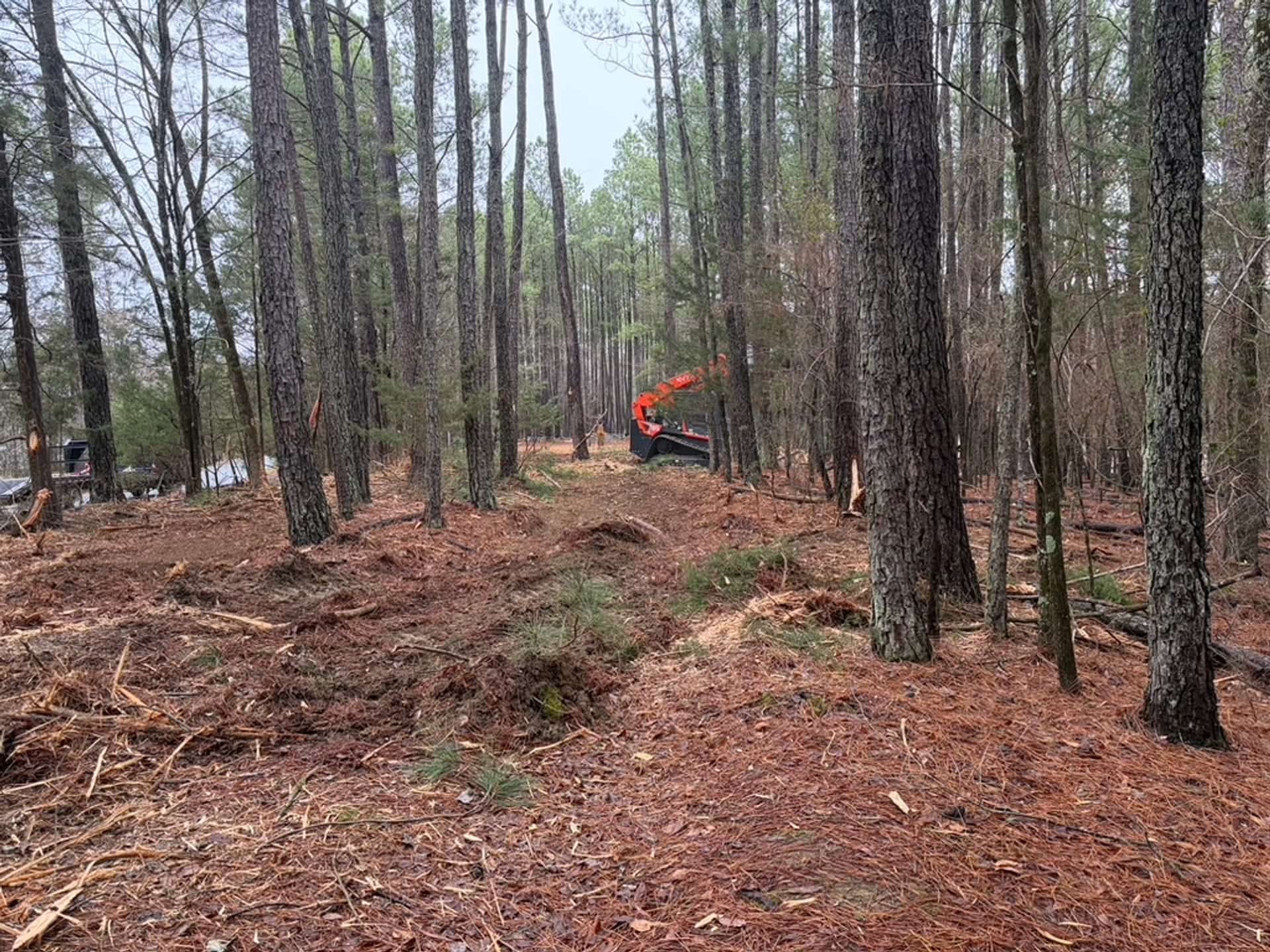
A lot of folks assume that once we grind everything down, the land stays clear forever. Others worry that we're only knocking the tops off and it'll all be back by next spring. The truth is in between, and it's worth understanding before you spend money clearing a property — because a little knowledge here saves you a re-clearing bill down the road.
Here's the honest answer on what forestry mulching kills, what grows back, and what you can do about it.
Does mulching kill the trees and brush?
Mulching grinds the stem and everything above ground down to a mulch layer, but it leaves the root system and the stump in the soil. For a lot of woody plants, that's effectively the end of them — small saplings, soft brush, briars, and most annual growth don't come back from a ground-level grind. They're done.
But certain species are survivors. Sweetgum, privet, some oaks, and a handful of other hardy plants can send up new shoots from the remaining root or stump. That's not the mulcher failing — it's just how those plants are built. They'd resprout after a chainsaw cut too. Mulching doesn't poison the roots; it removes what's above ground.
So will the brush grow back?
Some of it can, and how much depends on what was growing there. On a property that was mostly saplings, briars, and soft understory, you'll get very little regrowth and the land stays open for a long time. On a property loaded with aggressive resprouters like sweetgum and privet, you'll see some new shoots come up over the following season.
The key thing to understand: regrowth from a mulched stump comes back small and soft. It's thin new shoots, not the thick, tangled mess you started with. It's dramatically easier and cheaper to manage than the original overgrowth ever was.
How to keep cleared land clear
The most common approach is simple maintenance. Once the land is mulched, keeping it open is a matter of mowing, bush-hogging, or a quick follow-up pass on the resprouts once or twice a year. That's a world of difference from paying to clear heavy woods again.
If you want to knock resprouting down harder, a targeted herbicide treatment on the fresh stumps or new shoots — done by you or a licensed applicator — is very effective on the aggressive species. Some property owners do a light re-mulch pass a year or two later to catch anything that came up, which is fast and cheap because the growth is minimal.
If your goal is a home site, food plot, or pasture, the mulch layer itself helps. It suppresses new seedlings, holds moisture, and breaks down into the soil over time, so you're not staring at bare dirt waiting for weeds to move in.
What about trees you want to keep?
Mulching is selective. We can clear the understory — the brush, vines, and junk saplings — and leave your mature hardwoods standing. That park-like look under a canopy is one of the most popular jobs we do in shaded Fort Mill and older York neighborhoods. We're not clear-cutting unless you want us to; we grind what you point at and leave what you want.
The mature trees we leave aren't harmed by clearing the brush around them. In fact, taking out the competing understory often helps them by freeing up water and nutrients.
Want an honest assessment of your property?
When we walk a property, we'll tell you straight what's likely to resprout and what won't, so you know what you're signing up for and can plan the maintenance. No overselling — if your lot is going to stay clear on its own, we'll say so.
Call or text Corey at (803) 610-2249 for a free on-site quote anywhere in York County and the greater Rock Hill / Charlotte area.