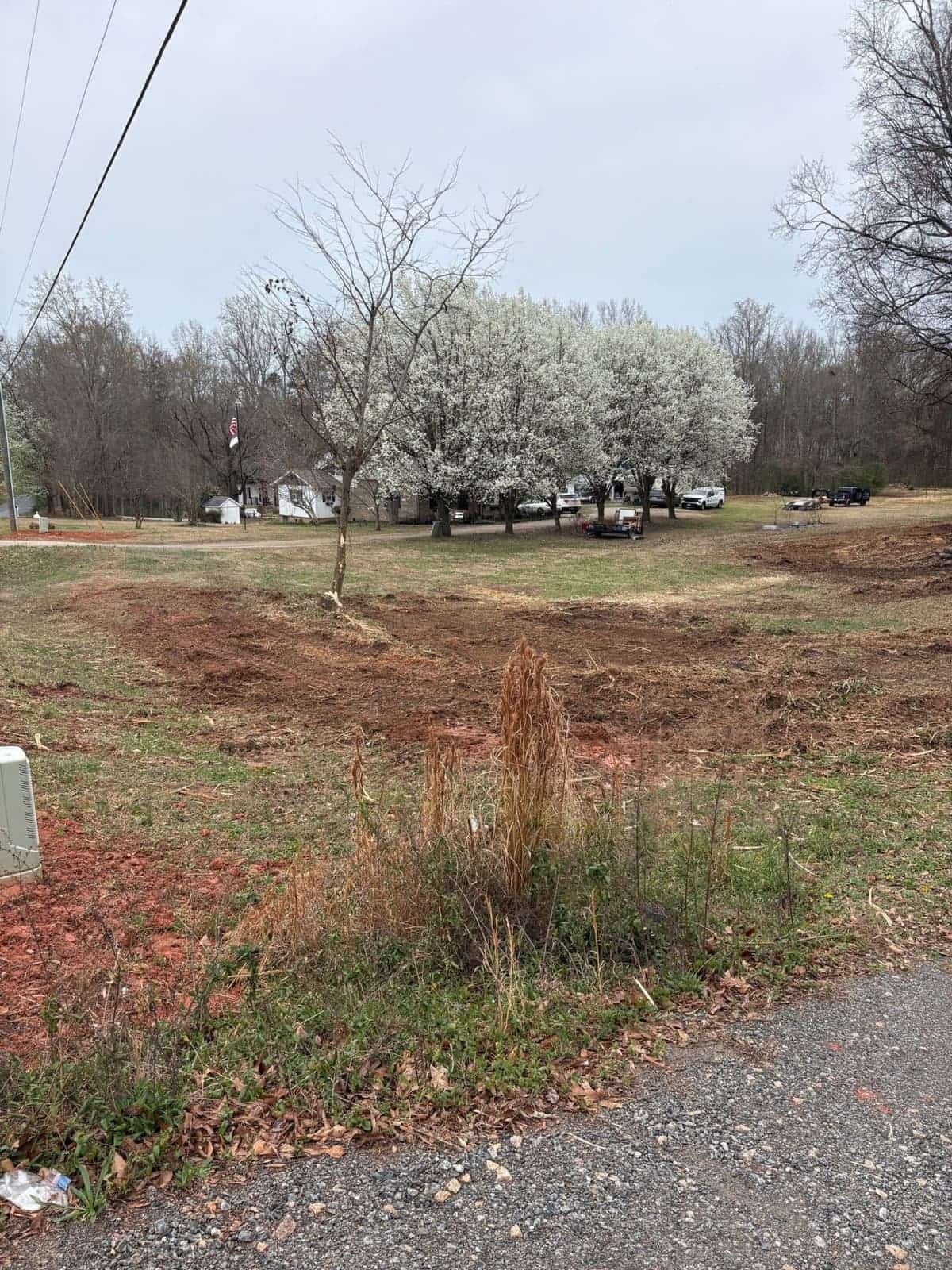
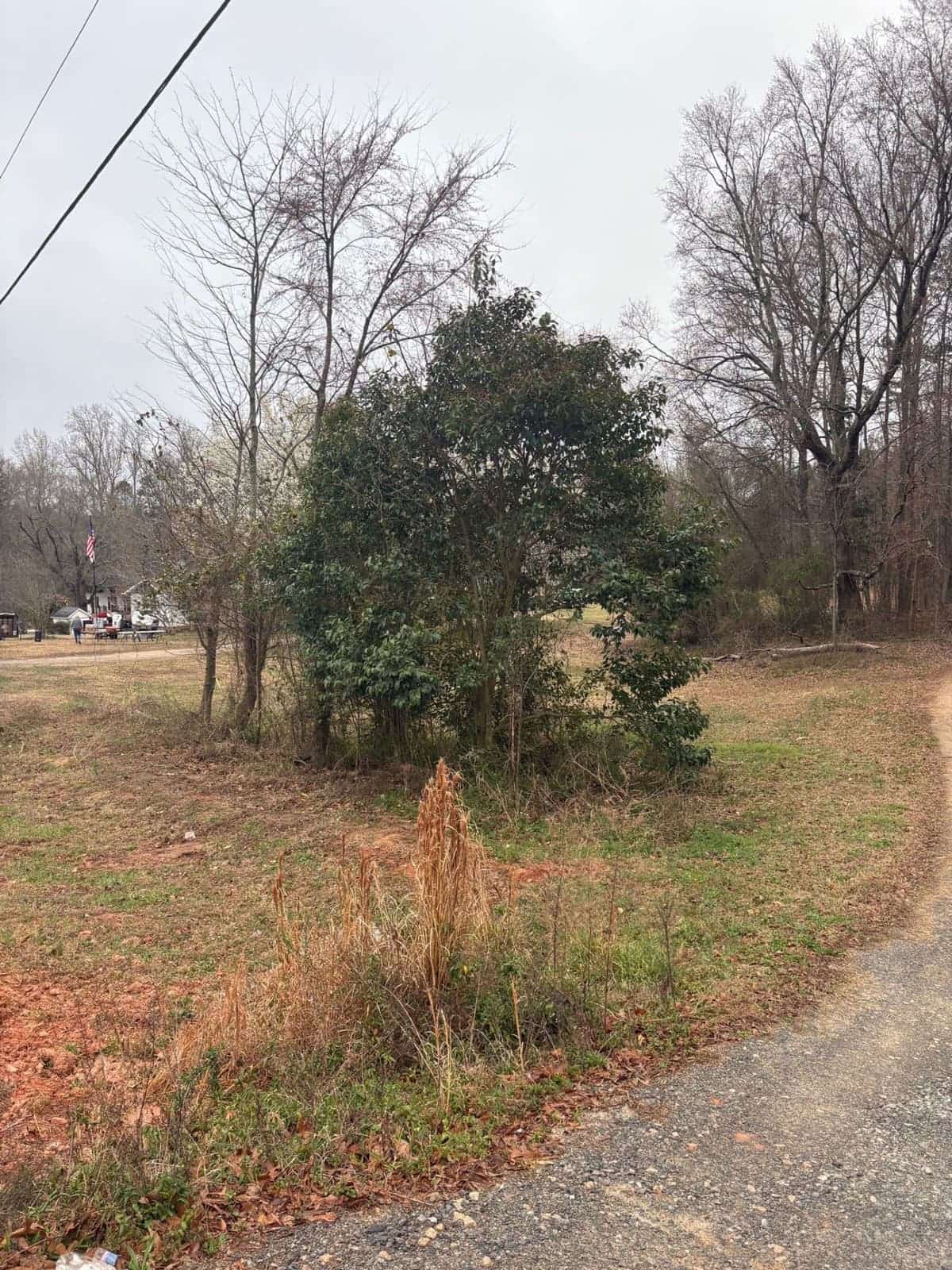
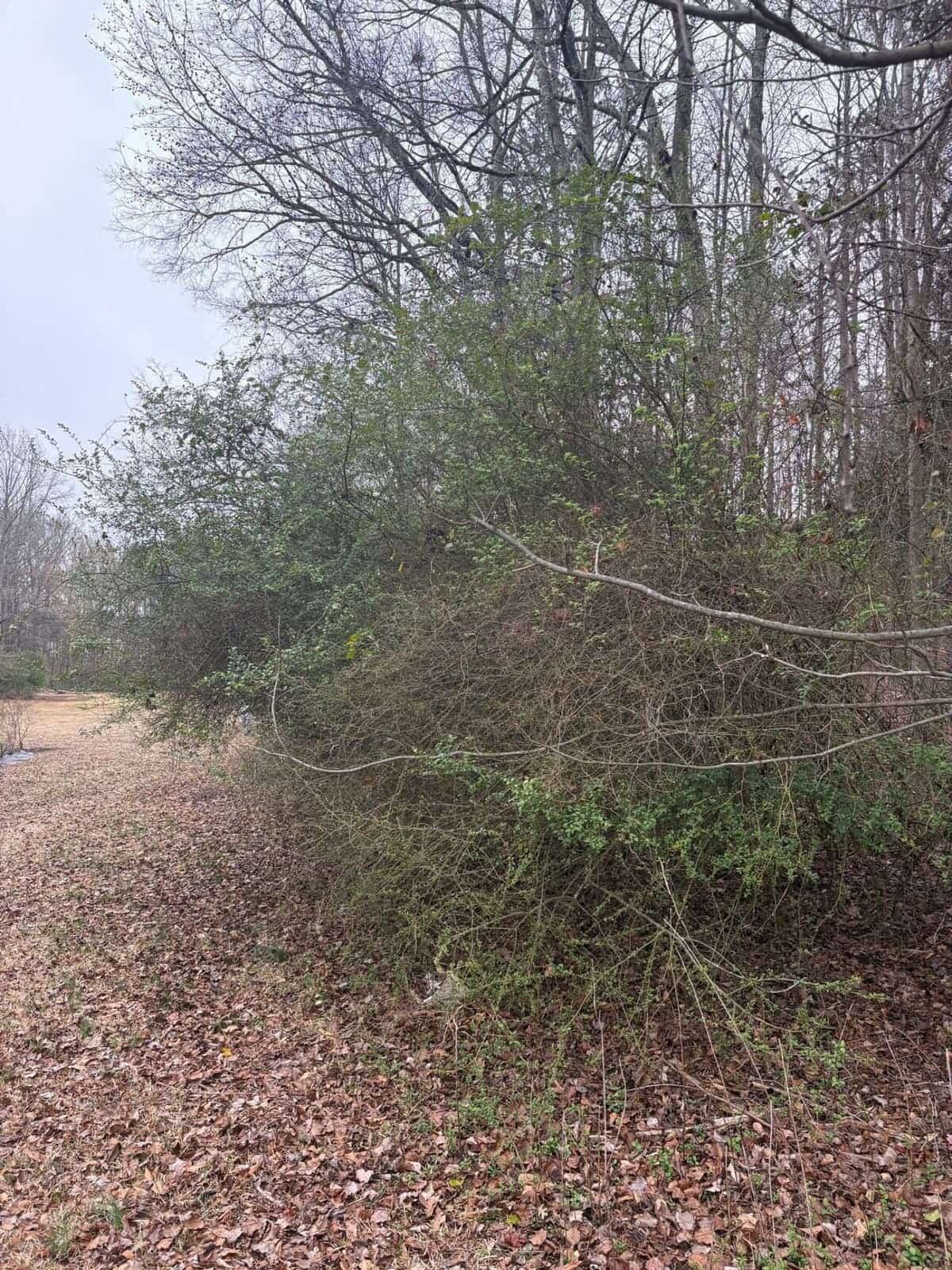
Brush has a way of taking over a property when you are not looking. A few years of unchecked growth and suddenly you cannot see your fence line, your backyard ends at a wall of privet, or that back acreage you used to walk through is completely impassable. A&S Brushworks specializes in reclaiming that land.
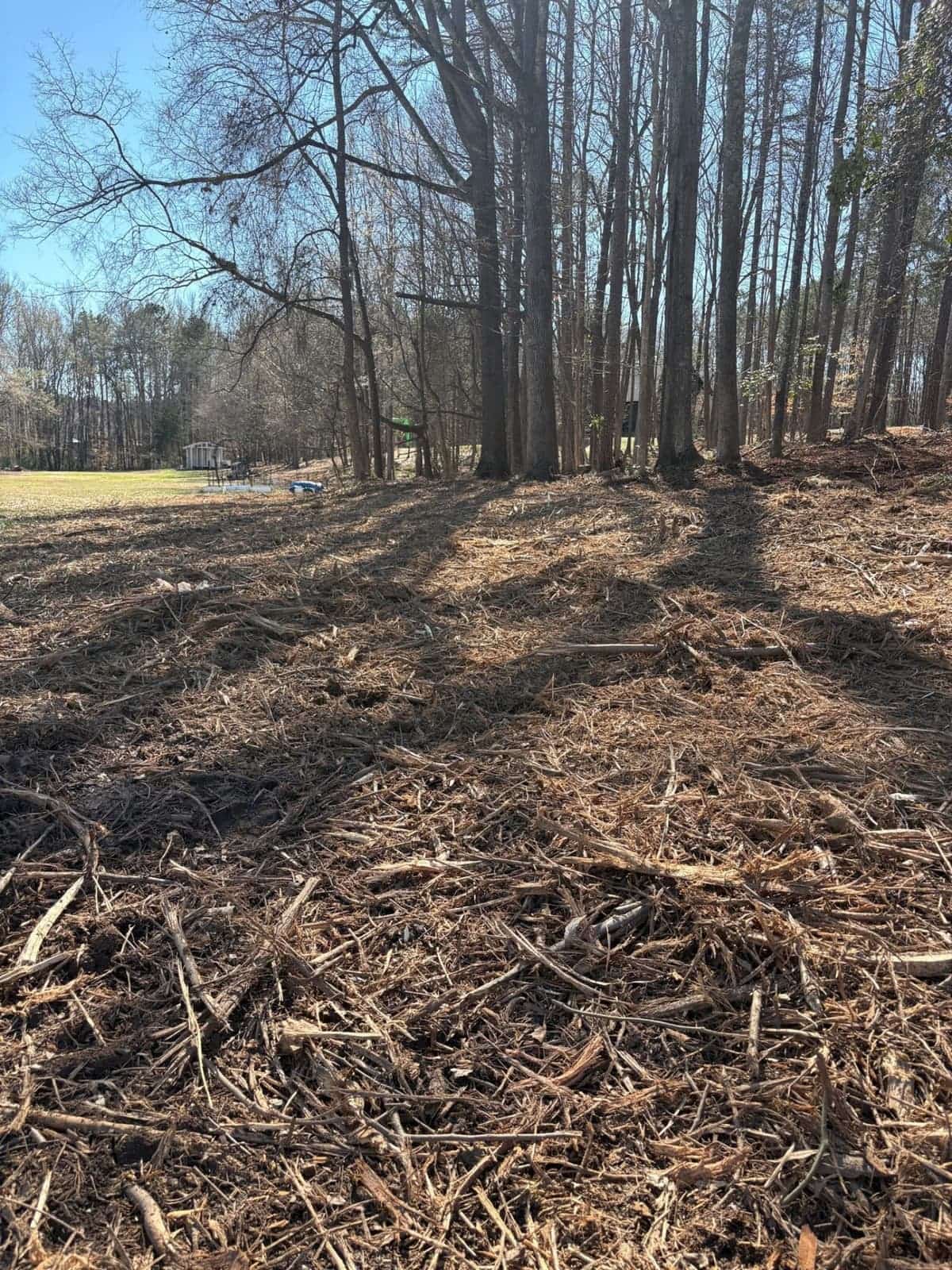
We use forestry mulching equipment to grind brush and undergrowth into natural mulch. The result is a clean, walkable property with your mature trees still standing and a layer of mulch on the ground instead of tangled vegetation.
Overgrown lots and neglected properties
If you have purchased a property that has been sitting vacant, or you own land that you have not been able to maintain, the brush buildup can be overwhelming. Small saplings, vines, and thorny undergrowth can grow thick enough in just a few seasons that you cannot walk through it without a machete.
Our equipment handles this kind of work quickly. We drive through the vegetation and grind it down in a single pass. A lot that looks like a jungle in the morning can be a clean, open space by the afternoon.
Invasive species management
The Carolinas have no shortage of invasive plant species. Chinese privet, Bradford pear seedlings, kudzu, and Japanese honeysuckle are some of the most common offenders in York County and the surrounding area — the Clemson Extension invasive species program provides identification guides and control strategies for these plants. Left unchecked, these species crowd out native plants, block sunlight from reaching the forest floor, and make land unusable.
Mulching removes all above-ground growth and covers the area with a layer of mulch that blocks light and suppresses regrowth. It is not a permanent solution for every invasive species — some have root systems that will try to come back — but it is the most effective mechanical first step. After mulching, targeted follow-up treatment is much easier and more effective than trying to manage a dense stand of invasive plants.
Selective clearing around mature trees
Not every brush removal job means clearing everything. Many property owners want to keep their large oaks, pines, or other mature trees but remove all the undergrowth beneath and around them. This is exactly what our equipment excels at.
We can work right up to the base of the trees you want to keep, clearing everything around them without bark damage or root disruption. The end result is a park-like setting: clean ground with mulch under the canopy of your mature trees.
Brush removal pricing
Brush removal in the Rock Hill and York County area typically runs $1,500 to $5,000 per acre, depending on how thick the undergrowth is, the mix of vegetation (thorny brush vs. small saplings vs. vines), and the terrain. A flat, moderately overgrown half-acre lot usually falls in the $1,500 to $2,500 range. Properties with steep slopes, dense privet thickets, or heavy vine coverage will be on the higher end.
Our minimum job size is $750. That covers the cost of mobilizing our equipment — loading a tracked mulcher onto a trailer and hauling it to your property. For smaller jobs like a single fence line or a narrow strip of brush along a driveway, $750 is usually enough to cover a solid amount of work. We provide free on-site estimates so you know the exact price before anything starts.
How mulching prevents regrowth
One of the biggest advantages of forestry mulching over other clearing methods is what it leaves behind. When we grind brush and invasive species, the resulting mulch stays on the ground as a thick organic layer — typically two to four inches deep. That layer blocks sunlight from reaching the soil surface, which smothers the existing seed bank and prevents many invasive species from germinating.
Species like Chinese privet and Bradford pear spread aggressively because their seeds sit in the top layer of soil, waiting for light. The mulch blanket denies them that light. Over the following months, the mulch breaks down and enriches the soil, giving native grasses and ground cover a better chance to establish. The result is healthier soil and far less regrowth than you would see after bush-hogging or hand-clearing, where seeds are left exposed and ready to sprout with the next rain.
Fence lines and property boundaries
Overgrown fence lines are one of the most common calls we get. Trees and brush grow into and around fencing, making it impossible to maintain or even find the fence in some cases. We clear vegetation along fence lines so you can repair, replace, or inspect your fencing.
Property boundary clearing is similar — you need a clear line between your land and the neighbor's. We mulch a defined strip along the boundary, making it easy to see where your property begins and ends. This is especially useful before installing new fencing or when resolving boundary questions with adjacent landowners.
Brush hogging vs. forestry mulching for brush removal
Brush hogging uses a rotary mower (a “bush hog”) pulled behind a tractor. It's good for keeping pasture and field grass knocked down, and it's the cheapest option when the vegetation is small enough — typically grass, weeds, and saplings under about 2 inches. The rotary blades cut, but they don't grind. Anything thicker than a sapling either jams the deck or gets pushed over and left lying on the ground.
Forestry mulching uses a high-RPM grinding head on a tracked compact loader. It handles brush, vines, saplings, and trees up to 8 inches in diameter — including the dense privet, sweetgum, and wild grape that brush hogs can't touch. The vegetation is ground into a clean mulch layer instead of left in piles, and the tracked machine works on terrain a tractor can't reach (slopes, soft soil, tight spaces).
Short version: if your brush is field grass and annual weeds, brush hogging is fine. If it's actual brush — privet, briars, saplings, vines, anything woody — forestry mulching is the right tool. Most of the “brush removal” calls we get are too thick for a brush hog to handle in the first place.
Brush removal across our service area
Brush removal in Rock Hill, SC
Rock Hill is our home base, so we run brush removal jobs here constantly. The most common scenario is a quarter- to half-acre residential lot with a back yard that has grown into the tree line — privet, sweetgum, and wild grape are the usual offenders. We can usually be on-site within a week. See our Rock Hill page →
Brush removal in Fort Mill, Tega Cay & Lake Wylie
The newer subdivisions on the north end of York County tend to have larger lots backing into wooded buffer strips that have grown up over the past decade. HOAs sometimes drive the cleanup, and we handle the documentation when needed. Fort Mill, Tega Cay, Lake Wylie.
Brush removal in York County, SC
York County is the heart of our service area. We work brush removal jobs from Clover and York at the western edge through Rock Hill and Fort Mill on the I-77 side. Rural homesites, fence-line clearing along pasture, and pond-access work are routine. York County overview →
Brush removal in Charlotte & Mecklenburg County, NC
We cross the state line into Mecklenburg County most weeks. Most Charlotte brush removal is residential — overgrown rear yards in south Charlotte, Steele Creek, Matthews, and along the Providence Road corridor. We cluster Charlotte work to keep pricing competitive. See our Charlotte page →
Brush removal in Lancaster & Indian Land, SC
Indian Land has been one of the fastest-growing parts of our area, and the brush jobs reflect that — wooded acreage being prepped for sale or build, larger residential lots backing into thick undergrowth, and easement clearing along utility runs. Indian Land · Lancaster.
Brush removal in Gaston County, NC
Gastonia, Belmont, and Mount Holly anchor a steady flow of brush removal work — older neighborhoods with mature canopy plus overgrown understory, and rural-edge parcels growing back after years of neglect. Gaston County overview →