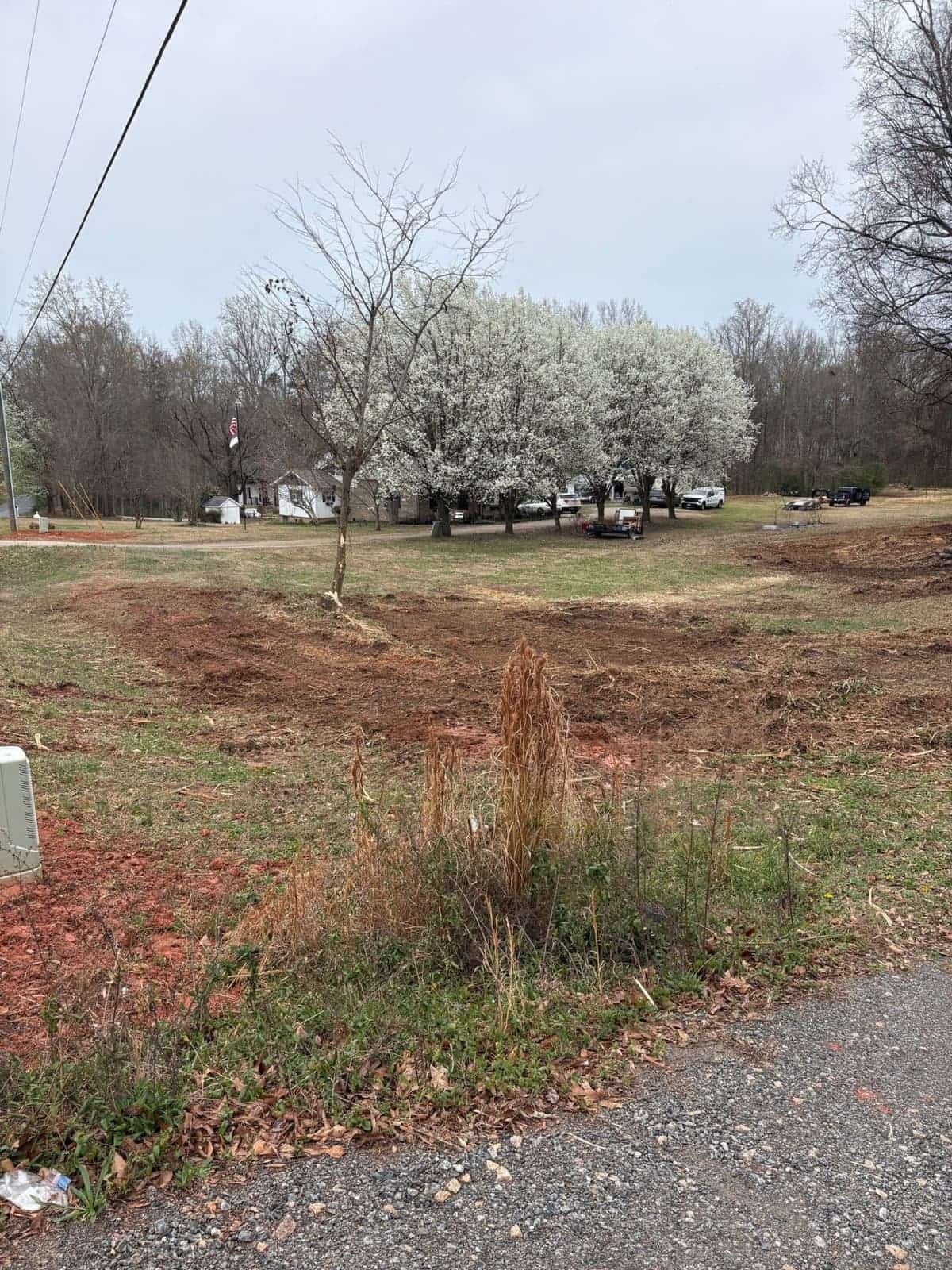
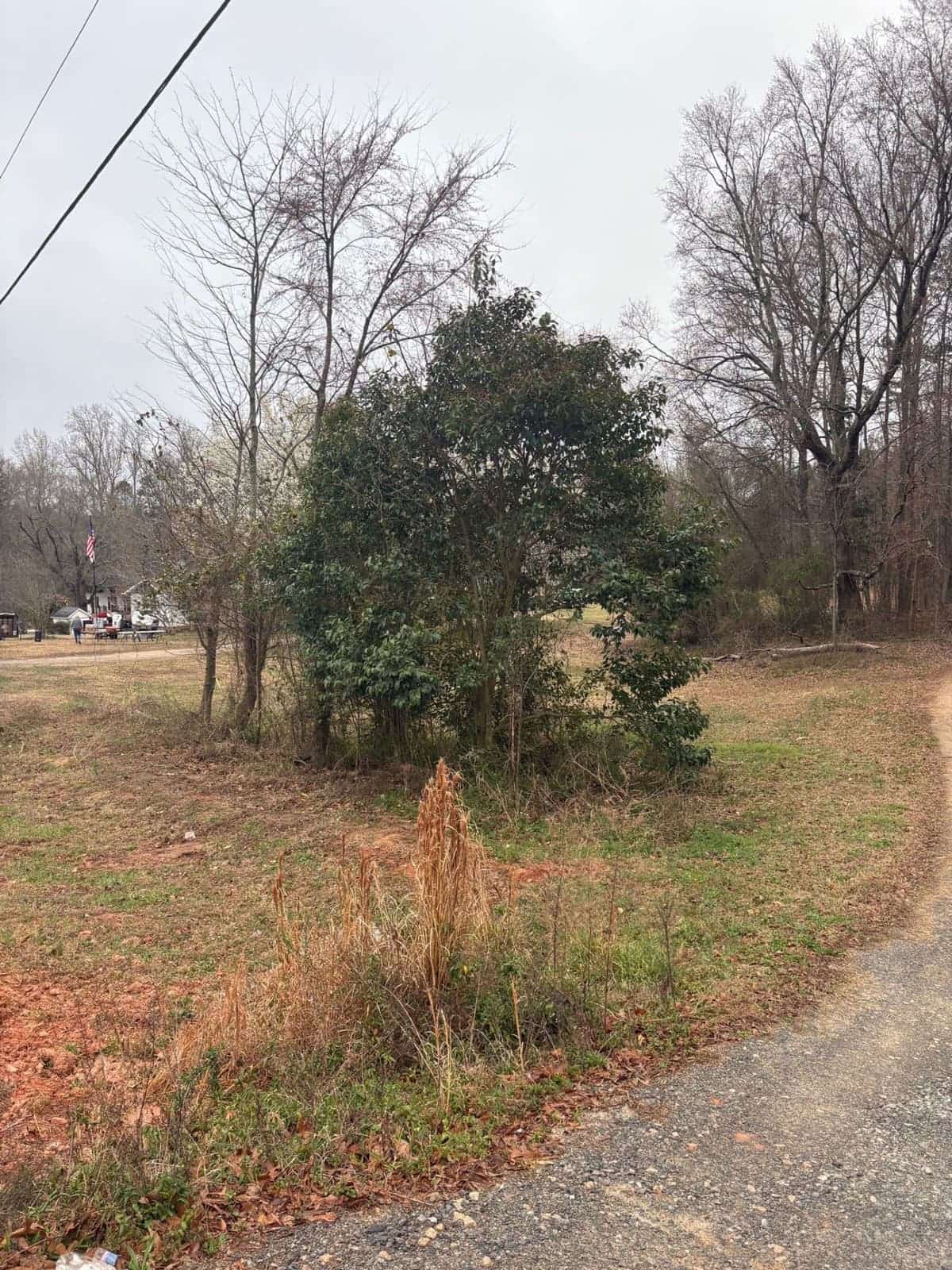
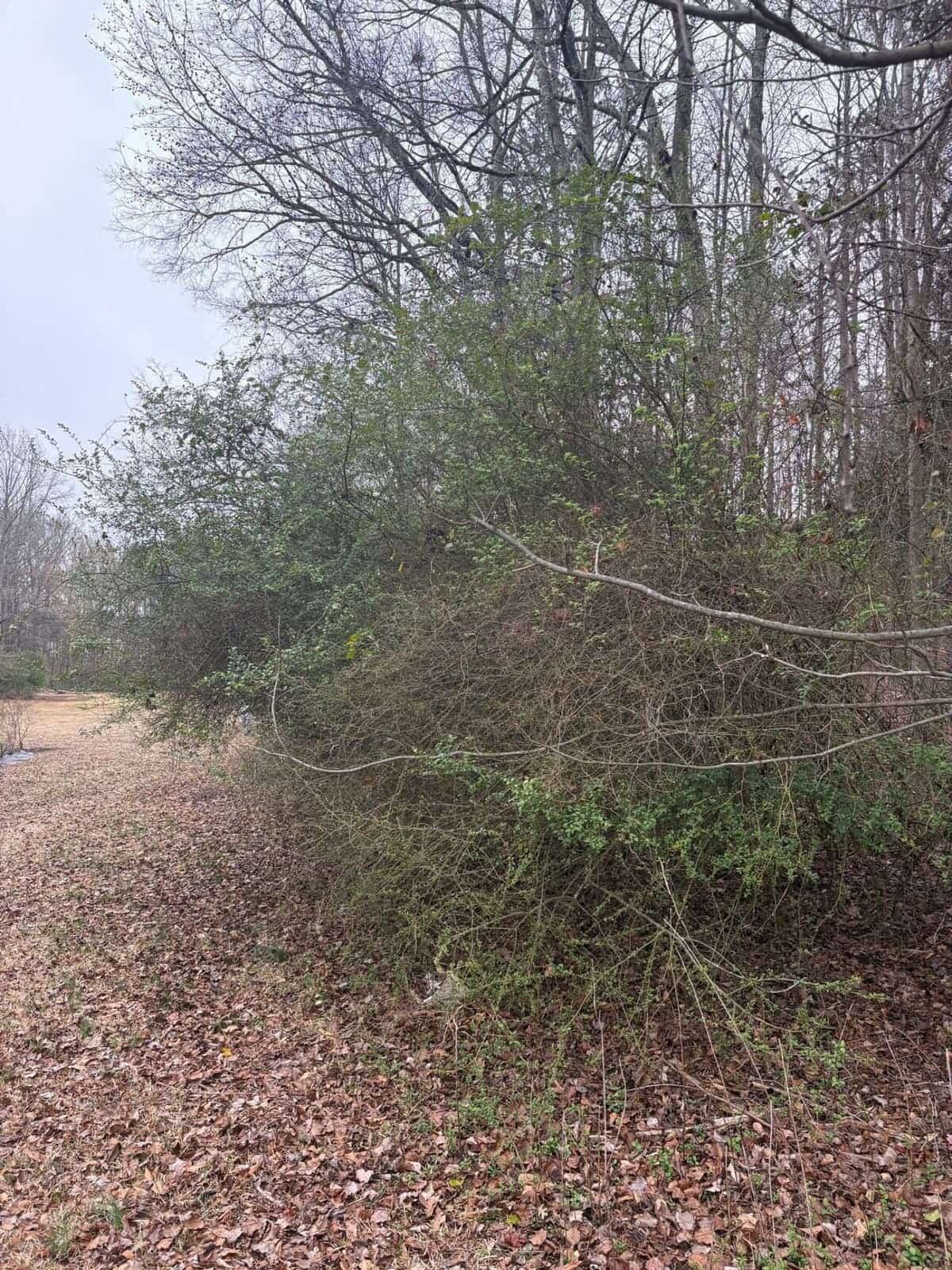
Forestry mulching is a single-step land clearing method that uses a rotary grinding attachment to convert standing trees, brush, and stumps into a layer of wood chip mulch. Unlike traditional clearing that requires felling trees, stacking debris, burning or hauling it off, and then dealing with stumps separately, forestry mulching does it all in one pass.
A&S Brushworks brings this service to Rock Hill, SC and the entire Greater Charlotte area. If you have overgrown land that needs to be cleared — whether it is a residential lot, a future building site, or acres of neglected pasture — forestry mulching is almost always the fastest, cleanest, and most cost-effective option.
How forestry mulching differs from traditional clearing
Traditional land clearing typically involves a bulldozer pushing trees into piles, a burn permit or dump trucks to remove debris, and a separate stump grinding pass. That process tears up topsoil, compacts the ground, and can take days longer than necessary.
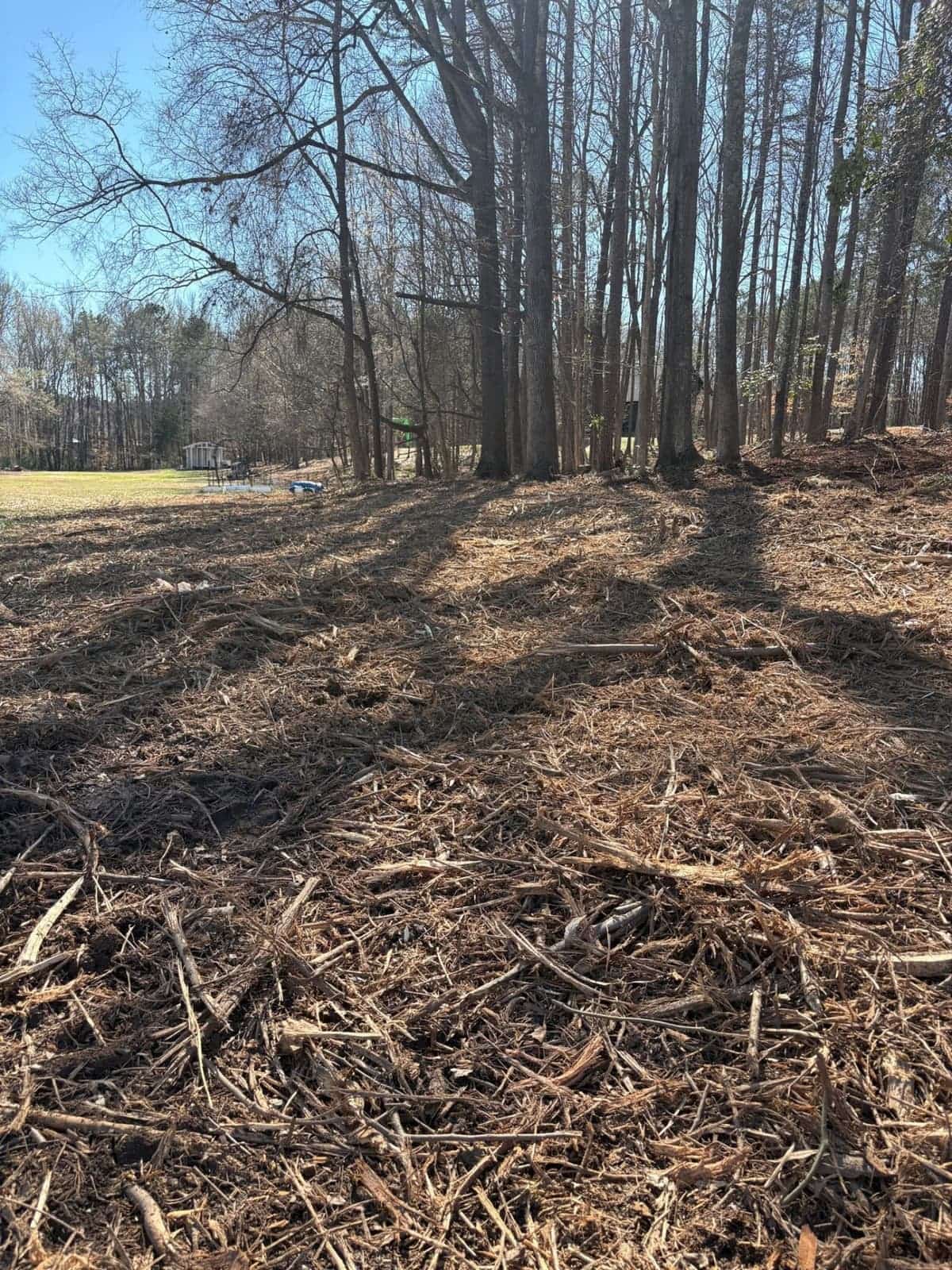
Forestry mulching skips all of that. The mulcher head spins at high RPM, shredding trees and brush into chips that fall to the ground as a 2- to 4-inch mulch layer. There is no pushing, no piling, and no hauling. Your topsoil stays intact, and the mulch layer immediately starts working to suppress weeds and prevent erosion.
For property owners who want to keep their soil healthy — especially on agricultural land or future home sites — this difference matters. You are not starting over with bare, compacted dirt. You are starting with a clean surface that still has its topsoil intact underneath a protective mulch layer.
Our equipment: Kubota SVL 97-3 + FAE mulcher
We run a Kubota SVL 97-3 compact track loader with 96 horsepower and a dedicated FAE forestry mulcher head. This combination handles trees up to 8 inches in diameter in a single pass. The Kubota tracks distribute weight evenly across the ground, minimizing ruts and compaction even on soft or wet soil.
The compact footprint matters. We fit into tight residential lots, narrow fence lines, and access-restricted areas where a full-size excavator or dozer would not be practical. We can work between trees you want to keep, selectively clearing undergrowth while leaving mature hardwoods standing.
Benefits of forestry mulching
No hauling costs. Everything is processed on-site. You do not pay for dump trucks, landfill fees, or debris removal. The material stays on your property as mulch.
No burning. Burn permits, smoke complaints, fire risk — none of that applies. The vegetation is mechanically ground, not burned.
Erosion control. The mulch layer holds soil in place immediately after clearing. This is especially important on slopes and near waterways where bare soil would wash away with the first rain. As Clemson Cooperative Extension notes, a 2- to 3-inch organic mulch layer also moderates soil temperature, retains moisture, and returns nutrients to the soil as it decomposes.
Topsoil preservation. Unlike dozer clearing, we do not scrape the ground. Your topsoil stays where it is, which matters if you are planting, building, or farming the cleared area.
Speed. Most residential lots are cleared in a single day. Larger acreage moves quickly because there is no stopping to pile, load, or haul debris.
Ideal use cases for forestry mulching
Forestry mulching works well for overgrown residential lots, new construction site prep, pasture reclamation, fence line clearing, fire break creation, trail building, and easement maintenance. If the vegetation is under 8 inches in diameter and you want it gone without a mess, forestry mulching is probably the right approach.
Forestry mulching pricing
Forestry mulching in the Rock Hill and Charlotte area typically runs $1,500 to $5,000 per acre. Light brush on flat ground sits at the low end, while dense vegetation with larger trees on uneven terrain will be higher. We provide free on-site estimates so you know the exact cost before any work begins.
| Job Type | Acreage | Vegetation | Typical Cost |
|---|---|---|---|
| Residential lot | 0.5–1 acre | Light brush | $750–$2,000 |
| Residential lot | 1–3 acres | Moderate | $2,000–$5,000 |
| Large / Commercial | 3+ acres | Dense | Custom quote |