When people call us about clearing a piece of land, one of the first things they want to know is which method is right for their property. Most folks have heard of all three — forestry mulching, bulldozing, and bush hogging — but the differences between them are a lot bigger than most people realize. Pick the wrong one and you'll either spend too much, end up with a mess, or damage land you were trying to improve.
This is a head-to-head breakdown of the three based on what we see every week in Rock Hill, York County, and across the Charlotte metro. No marketing fluff — just what each method actually does, what it costs, and which scenarios it fits.
What Each Method Actually Does
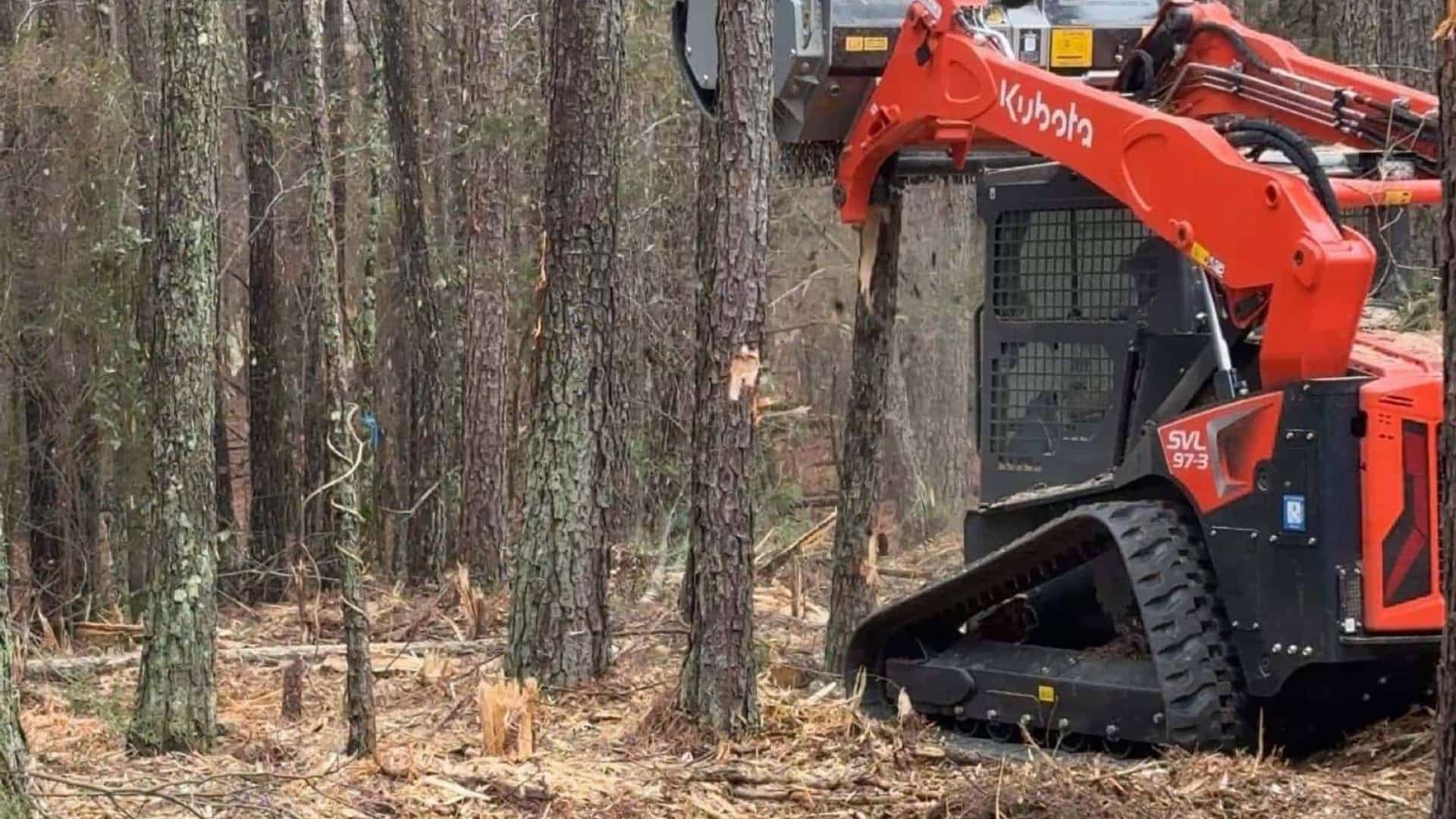
A forestry mulcher is a tracked machine — in our case a Kubota SVL 97-3 — with a rotary drum head (FAE brand on our rig) that grinds trees, brush, and stumps into fine mulch right where they stand. Nothing gets stacked, nothing gets hauled, and the ground is usable the same day. Most heads handle trees up to about 8 inches in diameter comfortably.
A bulldozer pushes. It knocks trees over, roots and all, then shoves everything into piles. Those piles either get burned (if you have a permit and a burn ban isn't in effect) or loaded onto haul trucks and trucked to a dump. Dozer clearing leaves bare dirt — sometimes deeply disturbed — and usually requires a separate stump grinding or follow-up grading pass.
A bush hog is a rotary mower that mounts on the back of a tractor. It's designed to cut grass, weeds, and light woody growth — think saplings up to about an inch thick. It doesn't touch standing trees, it doesn't touch stumps, and it won't get anywhere near hardwoods. It's essentially a heavy-duty lawnmower for pasture.
Cost Comparison: What You'll Actually Pay
Forestry mulching in the Rock Hill and York County area runs $1,500 to $5,000 per acre. That's all-in — equipment, labor, and cleanup. There's nothing to haul, nothing to burn, and no follow-up grading fee. Most residential jobs fall between $2,000 and $3,500 per acre.
Bulldozer clearing is where people get surprised. The dozer itself costs about the same per hour as a mulcher, but you're paying for the whole operation: the dozer, the stacking crew, the haul trucks, the dump fees, and often a stump grinder to come back afterward. Total project cost for a comparable acre typically lands at $4,000 to $8,000, sometimes higher if dump fees in your area are steep or if the debris won't burn on-site.
Bush hogging is cheap — $75 to $200 per hour for a tractor and operator, and a flat pasture acre might take an hour or two. But you only get what a bush hog can do, which is knock down grass and light brush. Anything bigger than a pencil-thick sapling will stop the mower or damage the blades. So bush hogging is only a real cost comparison if your property is already mostly grass.
Speed: How Fast Each Method Finishes the Job
Forestry mulching is the fastest method for most real land clearing jobs because everything happens in one pass. A single-acre residential lot with moderate brush takes 4 to 8 hours of machine time — typically done in a day. Two to five acres is usually two to four days. There's no separate mobilization for stacking crews or dump trucks because there isn't anything to stack or haul.
Bulldozer clearing takes 3 to 5 times longer on the same acre because each phase happens sequentially. Day one the dozer pushes. Day two the crew stacks. Day three the trucks haul. Day four the stump grinder runs. Weather delays at any step push everything out. A one-acre bulldozer job that sounds like a day of work on paper often stretches across a full week once hauling and grading get factored in.
Bush hogging is the fastest by the hour — a tractor can cover a clean pasture acre in under an hour — but it doesn't do the same job, so speed comparisons aren't really apples to apples. If your goal is to keep an already-cleared pasture cut, a bush hog is the right tool and it's fast. If your goal is actually clearing land, a bush hog will get stopped by the first real tree.
Finish Quality: What the Land Looks Like When It's Done
Forestry mulching leaves a 2- to 4-inch layer of clean wood mulch covering the cleared area. Stumps are ground to roughly ground level. The mulch suppresses regrowth, prevents erosion on Piedmont clay slopes, and breaks down over 12 to 18 months to improve soil. Most customers are surprised by how finished the ground looks — it's not bare dirt, but it's not a mess either. You can walk on it, mow it eventually, or plant through it.
Bulldozer clearing leaves bare, disturbed dirt. Topsoil gets pushed around, roots get ripped out, and the ground is compacted in high-traffic spots. You'll almost always need to regrade and reseed to get anything growing again. On sloped York County properties, exposed dirt after a heavy rain means real erosion problems — we've been called out to fix the aftermath on jobs dozer crews left behind.
Bush hogging leaves a ragged cut across whatever grass or light brush you mowed. Anything stemmy and woody gets torn rather than cleanly cut, which invites regrowth faster. The ground underneath is untouched — nothing is ground down, nothing is removed. For pasture maintenance that's fine. For actual land clearing it's not a finished result.
Environmental Impact: What It Does to Your Property
Forestry mulching is the lowest-impact method of the three. The tracked machine has low ground pressure, so it doesn't rut up the soil the way wheeled equipment does. Nothing gets burned, so there's no smoke, no smell, and no risk of the fire getting away. Nothing gets hauled off-site, so there's no fuel burn from truck trips. The mulch layer acts as erosion control, which matters a lot on the sloped lots you see across Rock Hill, Fort Mill, and Lake Wylie.
Bulldozer clearing is the most disruptive. Ripping root balls out disturbs soil structure, kills off the microbiome, and opens the ground up to erosion and weed colonization. Burn piles — where allowed — release significant smoke and require permits. Hauling means diesel truck trips, sometimes dozens of them for a big job.
Bush hogging is the lowest impact because it barely does anything below grass level. The tradeoff is you're just cutting the tops — the root systems of anything bigger than grass are still in the ground and will regrow. For invasive species like privet or kudzu, bush hogging is actually counterproductive because it stimulates regrowth without killing the root.
Which Method Fits Which Property
Choose forestry mulching if you have wooded or brushy land with saplings, small trees, and undergrowth, and you want the land usable quickly without hauling. This covers probably 80 percent of the jobs we do — residential lot cleanup, fence line clearing, trail cutting, selective clearing around mature trees you want to keep, pasture reclamation, and site prep for builders who don't need bare dirt.
Choose a bulldozer if you need completely bare, graded dirt for a large commercial slab, a road cut, or a major excavation where the soil itself needs to move. Dozer work is also appropriate if you need to push out very large trees (over 12-inch diameter) that exceed what a mulcher can handle. For most residential and small commercial clearing, dozer work is overkill and more expensive than it needs to be.
Choose bush hogging if your land is already cleared and you just need to keep a pasture or field cut. It's pasture maintenance, not land clearing. If you've got anything bigger than heavy grass and small saplings, a bush hog won't get you where you want to go.
Common Mistake: Using a Bush Hog When You Need a Mulcher
The most frequent call we get from frustrated property owners goes like this: 'I had a guy with a tractor come out and bush hog my lot, but there's still brush everywhere and nothing really looks cleared.' That's because a bush hog isn't a clearing tool — it's a mower. The person who bush hogged the lot probably did exactly what they were supposed to do with their equipment. It just wasn't the right equipment for the job.
If you've already paid for bush hogging and you're not happy with the result, the next step is almost always a forestry mulcher coming in to finish the job. At that point you've paid twice. It's worth a 10-minute phone call up front to confirm which method your property actually needs before you book anything.
Quick-Reference Comparison
Cost per acre: forestry mulching $1,500–$5,000, bulldozer $4,000–$8,000+, bush hog $75–$200/hour (pasture only).
Time for one acre: forestry mulching same-day, bulldozer 3–5 days with all phases, bush hog under an hour on clean pasture.
Debris handling: forestry mulching leaves mulch on-site, bulldozer requires hauling or burn permits, bush hog leaves cuttings in place.
Finished look: forestry mulching is clean mulch-covered ground, bulldozer is bare disturbed dirt, bush hog is cut grass with untouched roots.
Best for: forestry mulching covers most residential and light commercial clearing, bulldozer is for major excavation and oversize trees, bush hog is for pasture maintenance only.
Getting the Right Method for Your Property
The honest answer most of the time is forestry mulching. Not because we happen to run a mulcher, but because most residential and small commercial clearing jobs in the Carolinas are exactly what the tool was designed for — vegetation that's too thick for a bush hog and not big enough to justify a dozer.
If you're not sure which method your property needs, get an estimate. We walk the land with you, talk through what you want the end result to look like, and tell you honestly which tool fits — even if that means recommending a dozer for part of the job or sending you to a good pasture guy for bush hogging. We'd rather give you the right answer than sell you the wrong service.
A&S Brushworks serves Rock Hill, Fort Mill, Tega Cay, Lake Wylie, York County, and the Greater Charlotte area across eight counties in SC and NC. Free estimates, honest recommendations, and if mulching isn't the right call for your property, we'll tell you that too.