Every year around mid-March, our phone starts ringing more. The weather breaks, people walk their property for the first time since fall, and they realize that overgrown back lot or tangled fence line isn't going to fix itself. Spring land clearing in South Carolina is when most property owners pull the trigger — and for good reason.
If you've been thinking about getting your land cleared, this is the window. Here's why spring works so well, what the process actually looks like, and how to make sure you're on the schedule before it fills up.
Why Spring Is the Best Time to Clear Land in South Carolina
There are a handful of reasons spring land clearing in South Carolina makes more sense than any other season, and they all come down to conditions — ground conditions, vegetation conditions, and scheduling conditions.
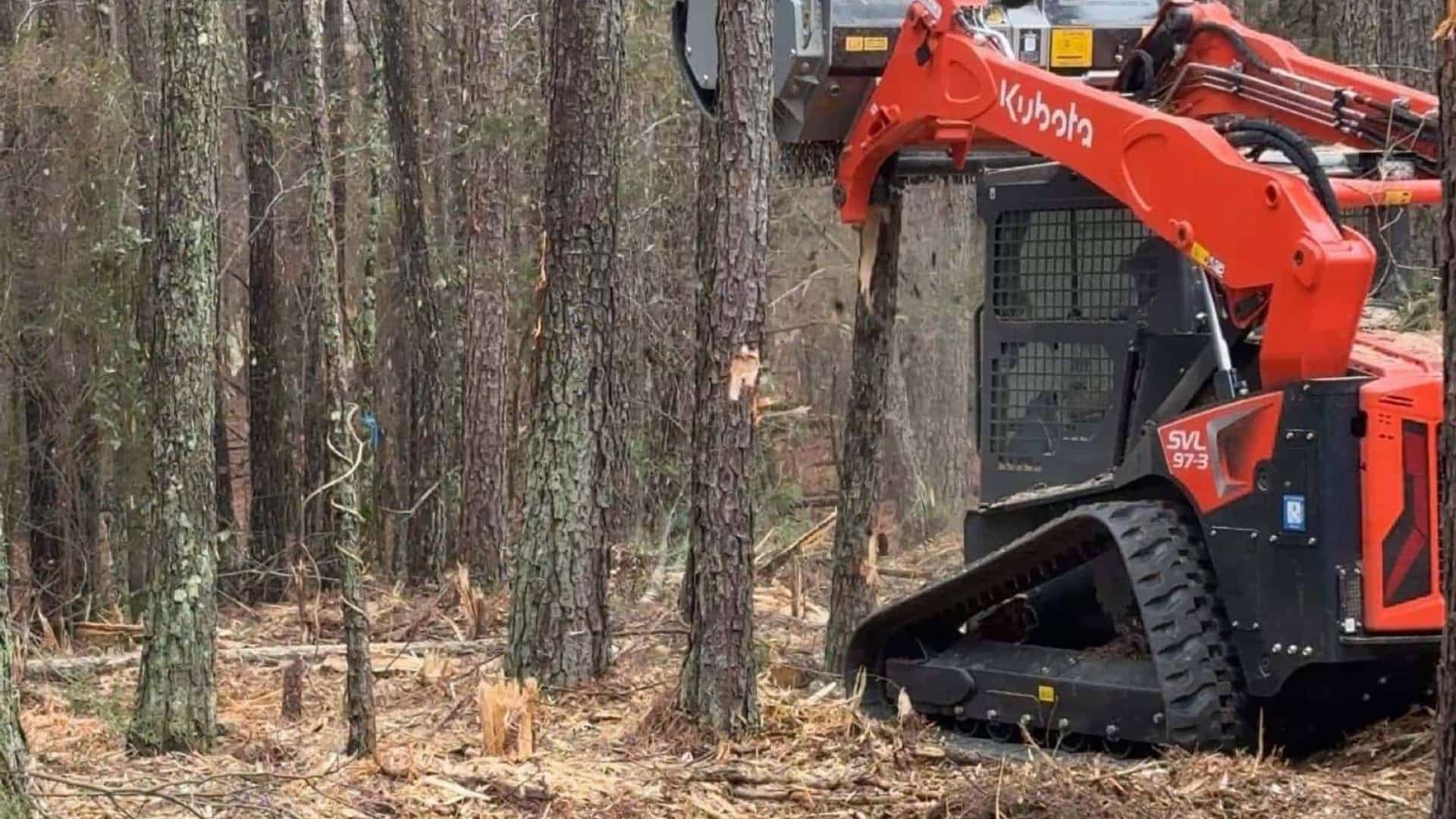
First, the ground has firmed up. After months of winter rain, Piedmont clay soil finally starts draining properly by late March. That matters because our equipment — a Kubota SVL 97-3 with an FAE forestry mulcher head — is a tracked machine with low ground pressure, but even tracked machines work better on firm ground. Dry enough to drive on, soft enough that the tracks don't tear things up. Late March through May hits that sweet spot in most years.
Second, vegetation is actively growing, and that's actually a good thing. You can see exactly what's alive and what's dead. Dormant brush in winter all looks the same — brown and bare. In spring, the stuff that's aggressively growing is obvious, and it's easier to make decisions about what stays and what goes. If you want to keep certain trees or native plants, spring makes that call much simpler.
Third, temperatures are manageable. Running heavy equipment in July in South Carolina is brutal on the operator and hard on the machine. Spring days in the 60s and 70s mean longer productive hours, less downtime, and better work overall.
The Construction and Project Calendar Pushes Everything to Spring
There's a practical reason beyond weather: the project calendar. Builders want sites cleared and ready for summer construction. If you're putting up a house, a shop, or an outbuilding, your contractor wants to break ground when the weather is consistently dry — and that means they need a cleared, prepped site by May or June.
Homeowners planning outdoor projects — fencing, gardens, pasture restoration, trail systems — are thinking the same way. Clear now, build or plant through summer, enjoy it by fall. The timeline works perfectly when you start clearing in spring.
This is also why our spring schedule fills up fast. We serve Rock Hill, York County, the Greater Charlotte metro, and the surrounding eight-county footprint across both Carolinas. That's a lot of property owners all getting motivated at the same time. If you wait until May to call, you might be looking at a June or July start date.
What a Spring Clearing Job Actually Looks Like
Here's what to expect if you book a spring land clearing job with us. First, we come out and walk the property with you. This is free, no obligation, and it's the only way to give you an accurate quote. We look at vegetation density, tree sizes, terrain, access points, and any obstacles — septic systems, buried utilities, trees you want to save.
Once we agree on scope and price, we get you on the schedule. For most residential jobs — half an acre to a few acres — we're talking one day of work, sometimes two for larger or heavily wooded properties. We show up with the Kubota and the FAE mulching head, and we start grinding. Everything gets processed into fine wood chips right where it stands. No hauling trucks, no burn piles, no debris left behind.
The mulch layer stays on the ground at 2 to 4 inches deep. It suppresses regrowth, prevents erosion, and breaks down naturally over the following months. When we pull off the property at the end of the day, the lot is clean, clear, and ready for whatever comes next.
Spring jobs tend to go smoothly because the ground cooperates and the daylight hours are long enough to get a full day of productive work in. The main variable is rain — we'll get to that.
Spring Weather: Planning Around Rain and Wet Days
South Carolina spring weather is mostly great for outdoor work, but it comes with afternoon storms and the occasional multiday rain event. Piedmont clay doesn't drain fast, so a heavy Thursday rain can push a Friday job to Monday.
We build flexibility into the schedule for exactly this reason. When you book a spring job, we'll give you a target window and confirm the exact date a few days out based on conditions. This isn't us being flaky — it's us making sure we don't tear up your property by running equipment on saturated ground.
The good news is that spring in the Piedmont is generally drier than winter. By April, the pattern shifts toward shorter, more predictable storms rather than the slow soaking rains of January and February. Most weeks have three to four solid working days, which is plenty to stay on schedule.
Clear Now or Fight Bugs and Brush All Summer
Here's something a lot of people don't think about until it's too late: tick and chigger season kicks in hard by late May in South Carolina. If you've got overgrown brush anywhere near your house, that's prime habitat for both. Clearing that brush before the bugs arrive means you're not fighting them all summer.
There's also the growth factor. South Carolina's growing season is aggressive. Brush you could walk through in March will be waist-high by June and over your head by August. Every month you wait, the job gets bigger. A half-day clearing job in April might be a full-day job by July, and that difference shows up in the price.
We see this every year. Someone calls in March, decides to wait, then calls back in August wondering why the quote went up. It went up because the property grew. That's not us padding the price — it's just more material to process, more time on site, more wear on the equipment.
Pricing, Timeline, and How to Get Started
Spring land clearing in South Carolina typically runs $1,500 to $5,000 per acre, depending on vegetation density, tree size, terrain, and access. Lightly wooded lots with mostly brush come in at the low end. Dense hardwoods, heavy undergrowth, and difficult terrain push toward the top.
Most residential jobs — a lot clearing, property line cleanup, or a few acres of overgrown pasture — fall in the $2,000 to $3,500 per acre range. We'll give you an exact number after the site visit, and that number is what you pay. No surprises, no change orders.
Timeline depends on when you call. Right now, in mid-April, we can usually get you on the schedule within one to two weeks. By May, that pushes out. If you want spring clearing done before summer, the time to call is now — not next month.
To get the process started, reach out for a free estimate. We'll schedule a site visit, walk the property with you, talk through what you want done, and have a quote to you within a day or two. We serve Rock Hill, Fort Mill, Tega Cay, Lake Wylie, York County, Chester, Lancaster, and the Greater Charlotte area on both sides of the state line.
Spring doesn't last long in South Carolina, and neither does our open schedule. If your property needs clearing, this is the window. Let's get it done before the heat, the bugs, and the brush make it a bigger job than it needs to be.