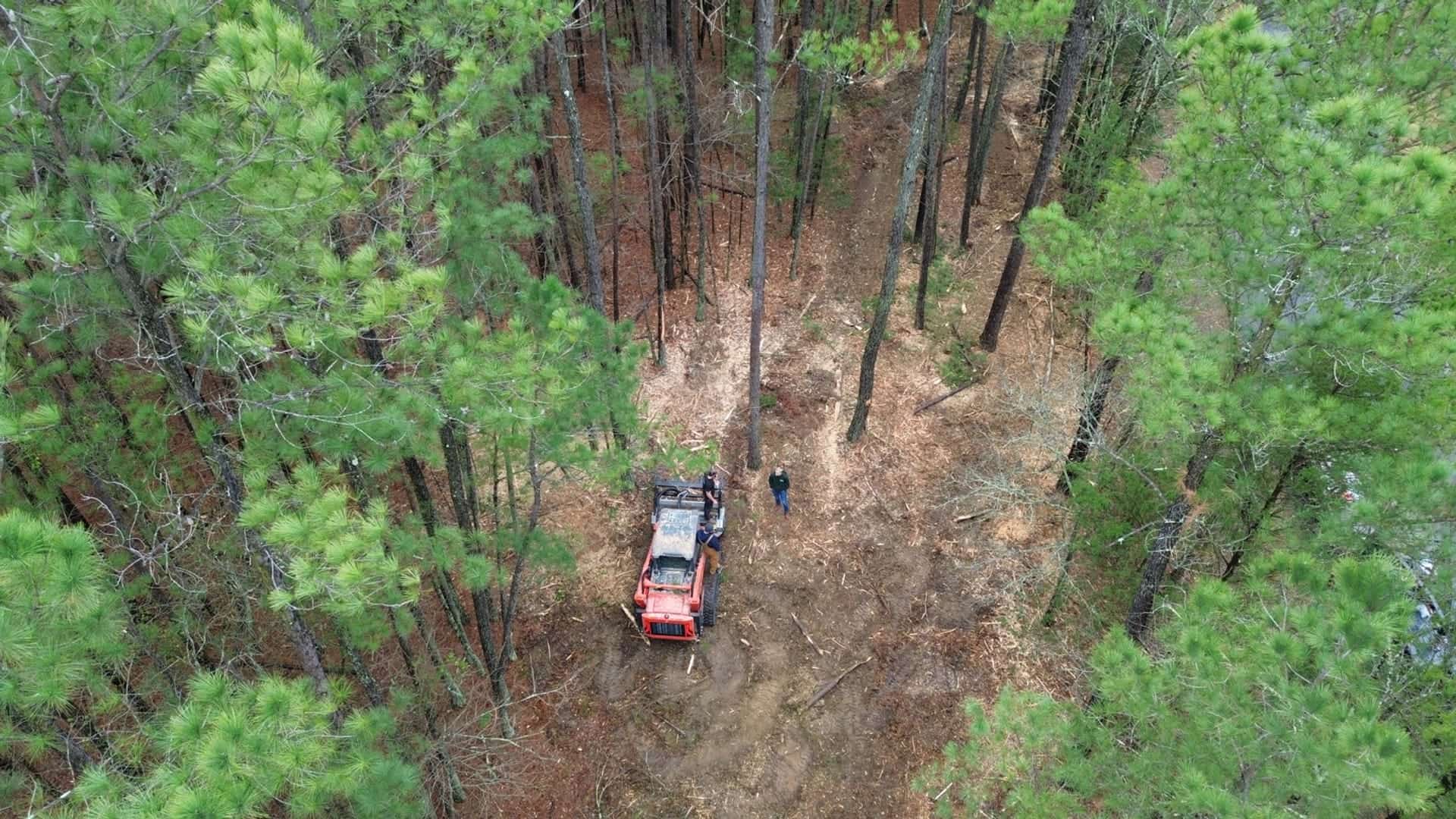
Fort Lawn is a small community in the southern part of Chester County with a long agricultural history. There's a lot of pasture and hay ground in this area, and a lot of it has been let go. When a hay field stops getting mowed and managed, it doesn't stay a field for long. Within 2 to 3 years, you'll see privet, sweetgum saplings, and eastern red cedar moving in. By year 5, you're looking at dense brush that's chest-high. By year 10, it's young forest.
If you've got a field in Fort Lawn or southern Chester County that's gone this direction, forestry mulching is the most practical way to get it back. Here's what the process looks like and what it costs.
How Pastures Become Overgrown
The Piedmont region of South Carolina has an aggressive growing season. Warm temperatures, decent rainfall, and long summers mean that vegetation grows fast. When a pasture stops being hayed or grazed, the first invaders are usually briars, privet, and wax myrtle. These are followed closely by sweetgum, pine seedlings, and cedar.
Privet is particularly aggressive in Chester County. It spreads by root suckers and bird-dropped seeds, and once it gets established, it forms dense thickets that shade out grass completely. Left unchecked for a decade, a field that used to produce hay is now a privet jungle with scattered pines growing through it.
The longer you wait, the more it costs to reclaim. A 3-year-old field with mostly brush and small saplings is a quick, inexpensive job. A 15-year-old field with 6-inch trees and impenetrable undergrowth takes significantly more time and machine effort.
How Forestry Mulching Restores Pasture
Our Kubota SVL 97-3 with its FAE forestry mulcher head grinds everything — brush, saplings, stumps, and undergrowth — into fine mulch at ground level. The machine works across the field in passes, taking down everything up to 8 inches in diameter.
After mulching, the field is flat and covered in a layer of wood chips. The existing grass root system — if the field hasn't been neglected for too long — is still in the soil beneath the mulch. In many cases, bermuda, fescue, or bahia will start growing back through the mulch within a few weeks of clearing.
For fields that have been overgrown for a long time, the grass may be too far gone. In that case, you'll want to follow up with overseeding once the mulch starts to break down, typically 2 to 3 months after clearing. A light disking before seeding helps establish good seed-to-soil contact.
Timeline From Overgrown to Usable Pasture
The clearing itself is fast. Most fields in the 3 to 10 acre range take one to two days of mulching. After that, the timeline depends on how you plan to use the land.
If you're restoring for hay production, plan on one full growing season after clearing before the first cut. The grass needs time to reestablish a root system strong enough to handle haying equipment. Overseeding in early fall after a spring or summer clearing is a common approach in this area.
For livestock grazing, you can typically start light grazing sooner — maybe 3 to 4 months after clearing if the grass is coming back well. Don't overgraze the first year. The pasture needs time to thicken up, and putting too many animals on thin grass will just set you back.
For general land management — keeping the property maintained, reducing fire risk, maintaining property value — the clearing alone accomplishes most of your goals. Annual mowing after that keeps it from reverting.
What It Costs to Reclaim a Field
Pasture restoration in the Fort Lawn area typically falls in the $1,500 to $4,000 per acre range. Fields that have only been neglected for a few years with light brush will be at the low end. Fields with dense stands of saplings and heavy privet will be higher.
Compared to traditional methods — bush hogging what you can, chainsawing what you can't, and then hauling or burning debris — forestry mulching is generally faster and cheaper for overgrown pastures. A bush hog won't touch anything over an inch or two in diameter. A forestry mulcher handles saplings up to 8 inches without slowing down.
We do free on-site estimates for every job. We'll look at the field, assess the vegetation, and give you a firm price. Call A&S Brushworks at (803) 610-2249.
Preventing Regrowth
The mulch layer left behind after clearing does suppress regrowth for a while, but it won't stop everything permanently. Privet and sweetgum will try to come back from root systems that survived the mulching. The key is follow-up maintenance.
If you're restoring for pasture use, regular mowing or grazing keeps woody species from reestablishing. For properties you don't plan to actively farm, mowing once or twice a year with a brush hog is enough to keep the brush at bay. The first year after clearing is the most critical — stay on top of it and you'll save yourself from having to pay for a second clearing.
Looking for land clearing in Fort Lawn, SC?
View our Fort Lawn service page →